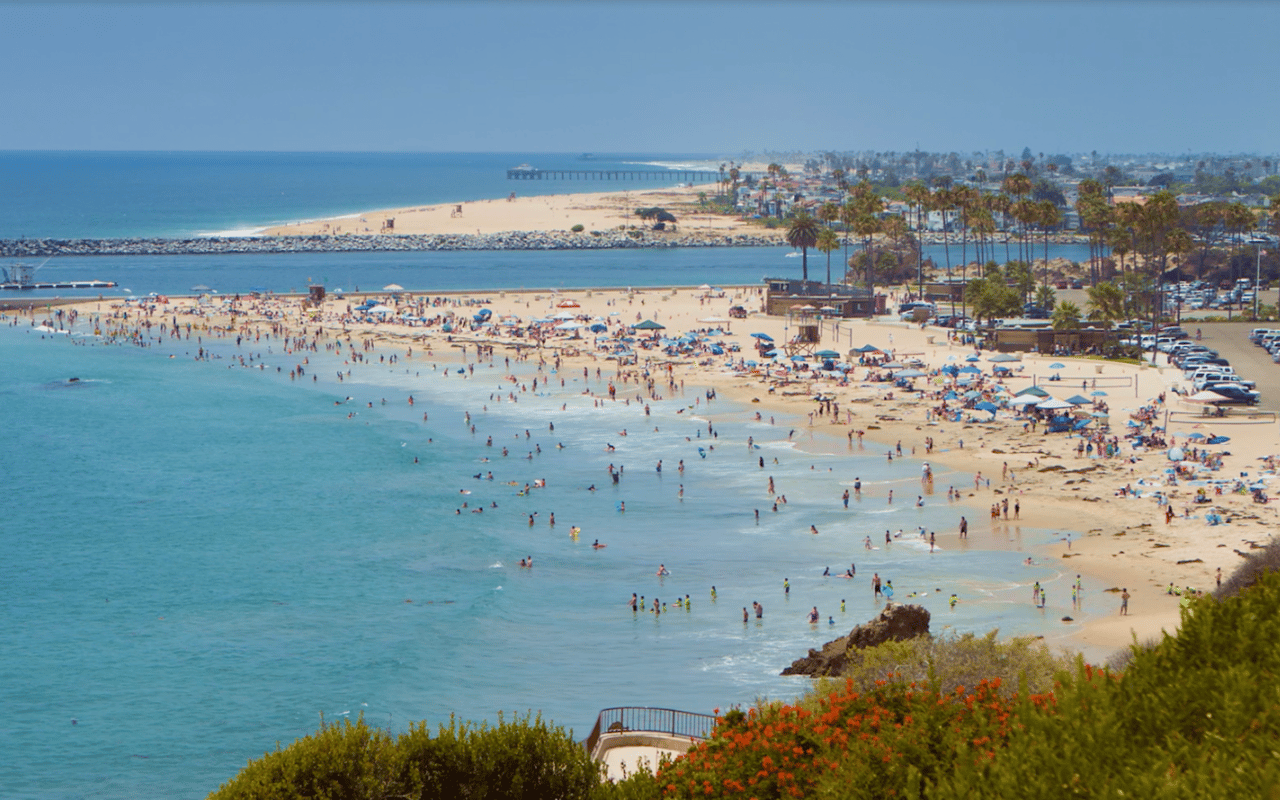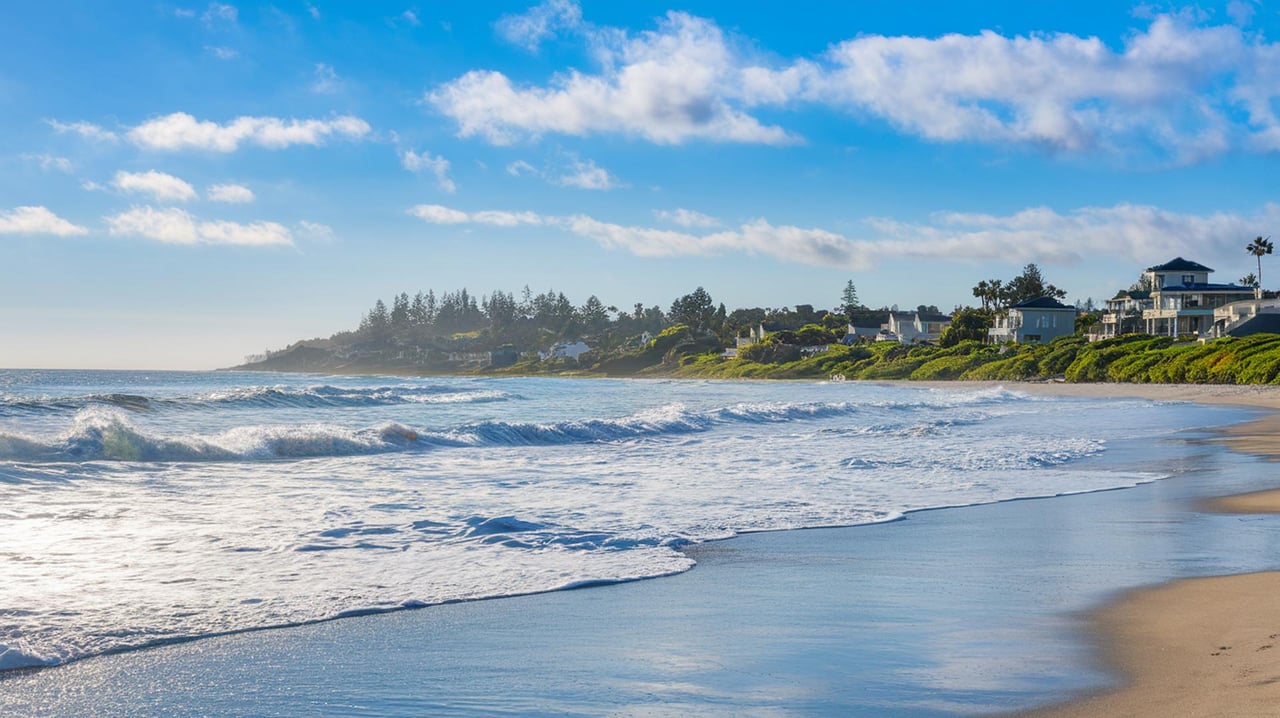
Before the fish market opens, before the first metered spot on McFadden Place fills, before anyone walking a dog past the pier has poured coffee, the boats are already gone. The dories launch off the sand around 2 a.m. and work the coast until they turn back toward Newport Pier sometime between six and nine, depending on the tide, the swell, and what's biting. By the time most of the neighborhood is awake, the day's catch has already been decided somewhere out past the kelp line.
Anyone who has lived within walking distance of the pier for more than a season knows the shape of this. What fewer people notice is that the shape changes on a fixed date every year, and this fall it changes on Friday, October 2, at 6 p.m., when California's recreational spiny lobster season reopens after a closure that has run since March 18.
The Version Everyone Already Knows
The Dory Fleet has been selling straight off the sand since 1891, when a single fisherman decided he'd rather sell his catch directly to the public than hand it to a wholesaler. The Newport Beach Historical Society made it an official landmark in June 1969, and it still operates the way it always has: a cluster of dories pulled up on the beach north of the pier, doubling as sales counters, with fishermen cleaning and weighing catch in front of the people buying it.
The Dory Fleet's own posted schedule runs Wednesday through Friday, 6:30 a.m. to noon, fish only, and Saturday, 5:30 a.m. to noon, for crab and the wider seasonal mix. Two lines form at the market, one for crab and one for fish, and the crab line moves first because that's usually what sells out first. Parking meters along the beachfront don't start charging until 8 a.m., which is either a small mercy or a subtle nudge, depending on how you look at it, since the market is often down to scraps by the time meters kick in anyway.
A handful of names show up again and again for anyone who buys here regularly. 'Crabby' Steve has built enough of a following that he posts what he's bringing in before he's even docked. Scott Breneman, who fishes under the name West Caught Fish Company, Giacomo D'Amato, and the Voyatzis family round out the regular roster, each running their own stretch of sand with their own specialty and their own hours, because the fleet is a cooperative of independent fishermen rather than a single business with one schedule.
That's the version most residents already carry around: early, crowded, cash-heavy, gone by mid-morning. All of it is true. None of it explains why the market you'll find on October 4 looks different from the one you found on September 27.
The Calendar Underneath the Ritual
The day-to-day rhythm of crab lines and sold-out mornings is real, but it sits on top of a second calendar that most residents never think about because it doesn't move with the weekend. It moves with state fishery seasons, and those seasons dictate what's legal to bring back to shore at all.
Rock crab, the fleet's steady staple, is open to recreational and commercial take year-round statewide, with a daily limit of 35 per angler and a four-inch minimum size. It's always there, which is part of why it feels like the market's constant.
Spiny lobster is the opposite. The season closes every spring, this year at midnight on March 18, and stays closed through summer while the animals molt, grow, and carry eggs. It's not an arbitrary shutdown. Keeping the fishery closed during the months when lobsters are breeding is the mechanism that keeps the population, and the fishery itself, viable year over year. For roughly five and a half months, no legal spiny lobster comes off any boat in California, including the dories working the sand at Newport Pier.
That closure ends this year at 6 p.m. on Friday, October 2, when the 2026-2027 recreational season reopens under the same seven-per-person daily limit and three-and-a-quarter-inch size minimum that governed the previous season. For the Dory Fleet, that single hour on a Friday evening does more to reshape what's on the sand than any day of the week can.
| Late September (pre-reopening) | Early October (post-reopening) | |
|---|---|---|
| Rock crab | Available, year-round | Available, unchanged |
| Fish (halibut, sea bass, seasonal catch) | Available per boat and season | Available per boat and season |
| Spiny lobster | Closed since March 18, unavailable | Legal again as of Oct. 2, 6 p.m. |
Why This Particular Reopening Runs Heavier Than Most
Every species has its own calendar, but lobster is the one that disappears completely rather than tapering off, and that's what makes its return different from a normal Saturday. Five and a half months of accumulated demand from regulars who've been buying crab and fish all summer while waiting for lobster to come back tends to compress into the first weekend or two after the reopening. Fishermen who specialize in different corners of the catch, whether that's West Caught Fish Company working deeper water or the Voyatzis family's longer-standing routes, are all working the same reopened fishery at the same moment, which means the sand in front of the pier gets more crowded, not because the market itself grew, but because everyone who held off for months shows up at once.
If the ordinary version of the market runs on an early-riser's schedule, sold out by mid-morning most weekends, the reopening weekend runs on an earlier one still. Anyone who has watched the crab line form before sunrise on a normal Saturday should expect the same instinct, just applied to lobster, the first weekend of October.
The Market at the Foot of the Pier Isn't One Market
Part of what makes all of this legible to residents and confusing to everyone else is that the Dory Fleet shares its address with a completely separate operation. The certified farmers market that sets up at the Newport Pier runs Sundays, 9 a.m. to 1 p.m., organized by Farm Habit, with produce, bread, and artisan goods from a rotating slate of vendors. It has nothing to do with the fishing cooperative beyond proximity, but the overlap in location and the shared morning timing means visitors regularly assume they're the same thing, or that the fish market runs on the farmers market's schedule.
They don't overlap in operator, in hours, or in what's for sale, and residents who've sorted this out tend to treat them as two separate weekend errands rather than one stop. The fish market's Saturday hours end at noon just as the Sunday produce market is still a day away from opening.
How This Actually Plays Out for Someone Who Lives Nearby
For a resident deciding how to spend an October weekend morning, the practical version of all this comes down to timing choices. The Wednesday-through-Friday fish-only window tends to move at a calmer pace than Saturday, since it's a narrower slice of what the fleet sells. Saturday brings the full mix, including crab and, starting October 2, lobster again, which means it's also the morning with the longest lines and the earliest sellouts. Parking stays free until 8 a.m. regardless of which morning someone chooses, which matters more on a Saturday than on a Wednesday, since a slower fish-only morning gives more room to arrive without racing the clock.
None of this changes what the market has always been. It's still a working beach cooperative that predates most of the houses around it, still run by fishermen who launch before most alarms go off. What changes, every year around this date, is what's actually in the boats when they come back in, and for anyone who's spent the summer buying crab while waiting on lobster to come back, that shift is worth knowing the exact hour it happens rather than discovering it by accident on a Saturday morning in the checkout line.
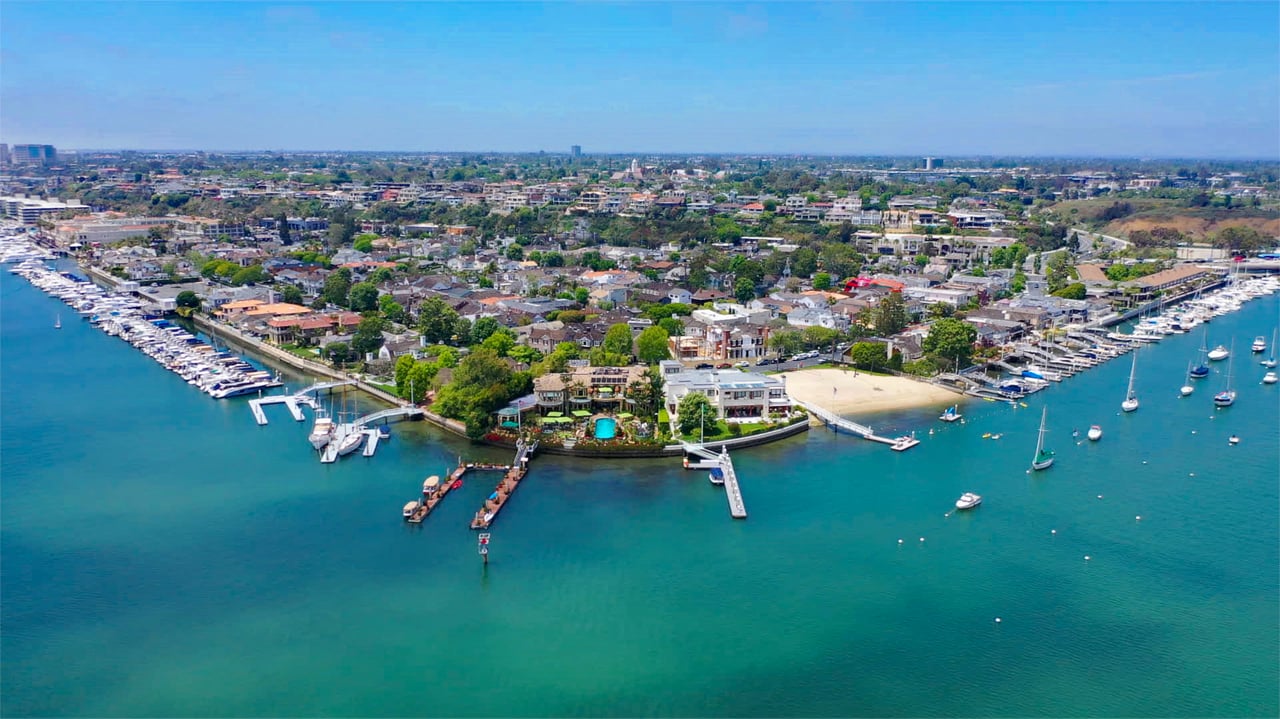
Living two blocks from a fishing cooperative that's been landmark-designated since 1969 is its own kind of neighborhood knowledge, the sort that doesn't show up in a listing description but shapes how a Saturday actually feels. If you're weighing what it means to live near the pier year-round, or thinking about a move that would put mornings like this within walking distance, Golding Realty is glad to talk through what that life actually looks like, season to season. Schedule a Private Consultation whenever you're ready.