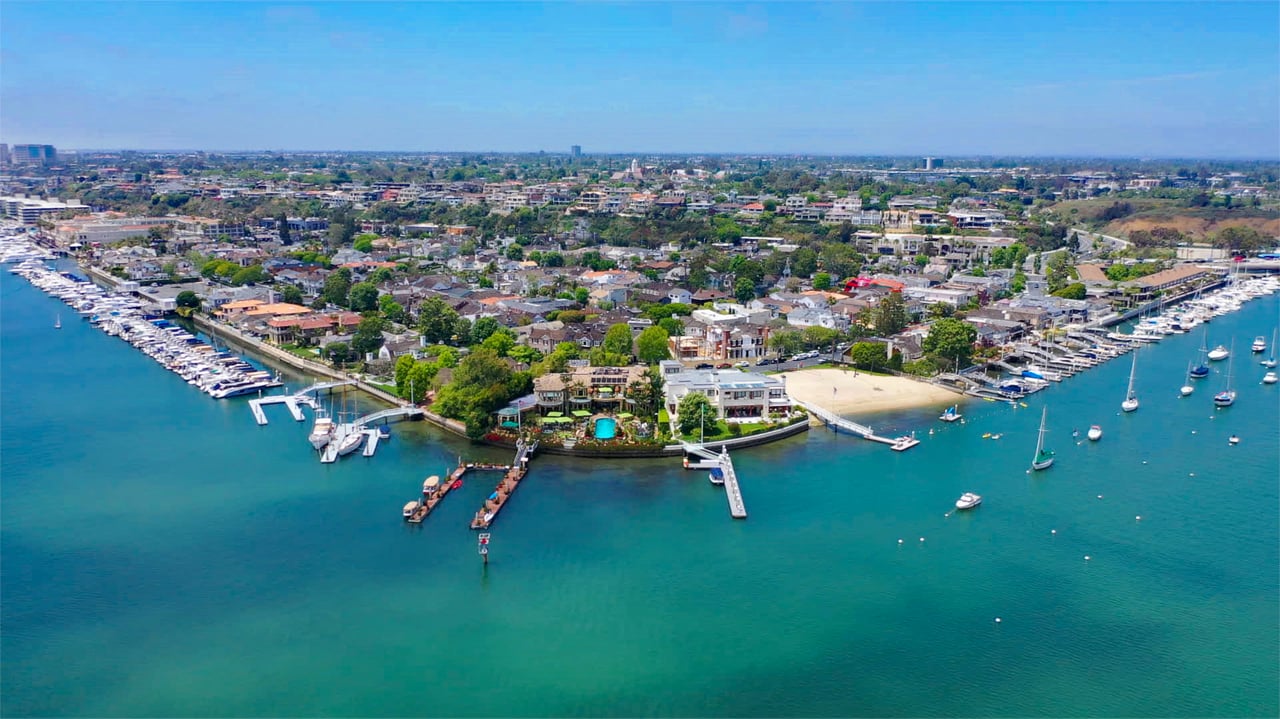
In 1919, a Newport Beach mayor, tired of fielding complaints about a swampy little sandbar in the middle of the harbor, put his frustration on the record. PBS SoCal quotes the mayor as saying the island had been sold "by a lot of damn crooks to a lot of damn fools." Seven years earlier it had been a mosquito-plagued mudflat. Sewage ran onto the beaches. The electrical lines weren't installed until 1914. Lot prices had dropped to $25.
That same stretch of land is now home to an exhibit called "120 Years of Welcome," and it closes on October 1. The exhibit lives inside a 1947 cottage on Marine Avenue, and it spends its final week doing exactly what the mayor never imagined the island would be capable of: presenting itself, on purpose, as a destination worth visiting. What the exhibit doesn't quite capture is that the island has been performing that same trick informally, on its own front porches, for just as long. This week, one version of the show is packing up while the other will start to appear on doorknobs and dock posts in the weeks ahead.
The Cottage Where the Argument Got Settled
The Balboa Island Museum sits at 210 B Marine Avenue, tucked behind a narrow passage off the main commercial strip. It was founded in 2000 with a straightforward mission: collect and preserve the history of Balboa Island, Newport Beach, and Orange County, and keep the material accessible for free.
The current exhibit, running from May 22 through October 1, 2026, is built around what the museum calls a curated history of Newport Beach through the lens of tourism. It includes a touchscreen archive tracing the moments and places that shaped the area's development as a destination, a set of first-person "living storytelling" segments from figures past and present, and a mural made entirely of historical newspaper clippings and old tourism advertisements. General admission is free every day the museum is open.
The exhibit's premise is essentially the mayor's 1919 complaint turned inside out. Where he saw a dump that had been unloaded on gullible buyers, the museum's own telling treats the island's transformation into a welcome mat as the actual story worth preserving. Both readings are accurate. The island really was built on speculation and bad infrastructure. It also really did become, within a decade or two, a place people crossed water on purpose to see. The exhibit closes this week, which means this is the last chance to see both versions laid out side by side before the walls come down.
The Ferry That Still Answers to a Regulator
Getting to that cottage usually means crossing the harbor, and the way you cross says something about how the island actually runs. The Balboa Island Ferry has operated continuously since 1919, the same year the mayor was airing his grievances. The crossing is short, about 800 feet, connecting the Balboa Peninsula to the island in a few minutes. The alternate route, over the bridges, runs up to six miles.
What's changed is the price, and it hasn't changed because more tourists showed up with cash to spend. It's changed because the California Public Utilities Commission periodically approves increases. In 2019, the Commission moved the pedestrian fare from $1.00 to $1.25 and the vehicle fare from $2.00 to $2.25. A later decision, issued in October 2024, authorized another increase, and by the following year the operator's posted rates had settled at these levels:
| Fare type | 2019 rate | Current rate |
|---|---|---|
| Adult pedestrian | $1.25 | $2.00 |
| Vehicle with driver | $2.25 | $3.00 |
| Frequent commuter (30-crossing booklet) | — | $64.00 (about 29% off regular fare) |
That's not a market responding to demand. It's a regulated utility making incremental adjustments over years, the same way a water district or a toll bridge does. The ferry survives not because Balboa Island residents are willing to pay whatever it costs to avoid a six-mile drive, but because the Commission has kept the increases small enough that the shortcut still makes sense at $2 a head. The island's most photographed piece of infrastructure runs on paperwork, not charm.
What the Loop Actually Measures
Once you're across, the walk along the island's edge is the best way to take it all in. The perimeter of the main island runs roughly 1.7 to 1.8 miles, depending on which stretch of sidewalk you count. Cross the bridge to Little Balboa Island and you can add another 0.7 to 0.8 miles, a quieter, more residential extension that most day visitors skip.
At the end of September, the loop was still mostly undecorated. The bayfront cottages looked much as they do most of the year: tightly packed, brightly painted, flying either a USC or UCLA flag depending on the household. But the same walk changes character in the weeks ahead. Past Halloween seasons on the island have turned into something closer to an outdoor gallery, with homeowners along South Bayfront competing, informally, to out-decorate each other before the 31st.
The Same Instinct, Repeated Without a Curator
That decorating tradition is the part of the island's story the museum exhibit doesn't cover, because nobody curates it. It just happens, house by house, the same instinct that built a tourism archive expressing itself without a touchscreen. Past seasons have included a Grim Reaper posted at a dock along South Bayfront, flying ghosts strung above it, and a Diamond Avenue storefront that reworks itself each year into a mock "medical clinic and butcher" display. The shops along Marine Avenue join in too, decking out their windows and handing out candy to trick-or-treaters who make the crossing.
One visitor who happened to walk the island about two weeks before Halloween described stumbling onto the display season by accident, calling it a pleasant surprise on what she'd expected to be an ordinary stroll and lunch outing. That's roughly the same window the museum exhibit will have just vacated. The cottage on Marine Avenue stops telling the island's story in October. The bayfront homes start telling their own version of it within the same few weeks, unpaid, unofficial, and considerably more chaotic than a touchscreen archive.
Marine Avenue itself has been doing a version of this for even longer. Sugar 'n Spice has operated as the island's original frozen banana and Balboa Bar shop since 1945, decades before anyone thought to put the island's history behind glass. The frozen banana became a fixture the same way the decorations did: informally, without a foundation or a board of directors, just a shop that stuck around long enough to become part of what people expect when they get off the ferry.
If You're Doing the Loop This Week
- The exhibit closes October 1. Museum hours run daily, so there's still time to see the touchscreen archive and newspaper mural before they come down.
- Ferry crossings run daily from 6:30 a.m. to midnight. Current posted fares are $2.00 for an adult pedestrian and $3.00 for a vehicle with driver, cash only.
- The main island loop is about 1.7 to 1.8 miles. Add the bridge crossing to Little Balboa Island for another 0.7 to 0.8 miles if you want the quieter half.
- Decorations along South Bayfront and Marine Avenue typically start appearing in the weeks after the exhibit closes, well before Halloween itself.
The exhibit and the decorating season aren't officially connected. Nobody at the museum is timing an anniversary show to hand off to homeowners with pumpkins. But the island has been doing this exact handoff, in one form or another, since a mayor called it a dump and a handful of residents formed an improvement association to prove him wrong. The cottage on Marine Avenue closes its version of that argument on October 1. The docks on South Bayfront will be making theirs again within a few weeks.
If the loop around Balboa Island has you thinking less about a walk and more about what it would take to actually own a piece of it, that's a conversation Mary Golding has had many times over on these same three blocks. Golding Realty works this stretch of Newport Beach directly, house by house, ferry crossing by ferry crossing.