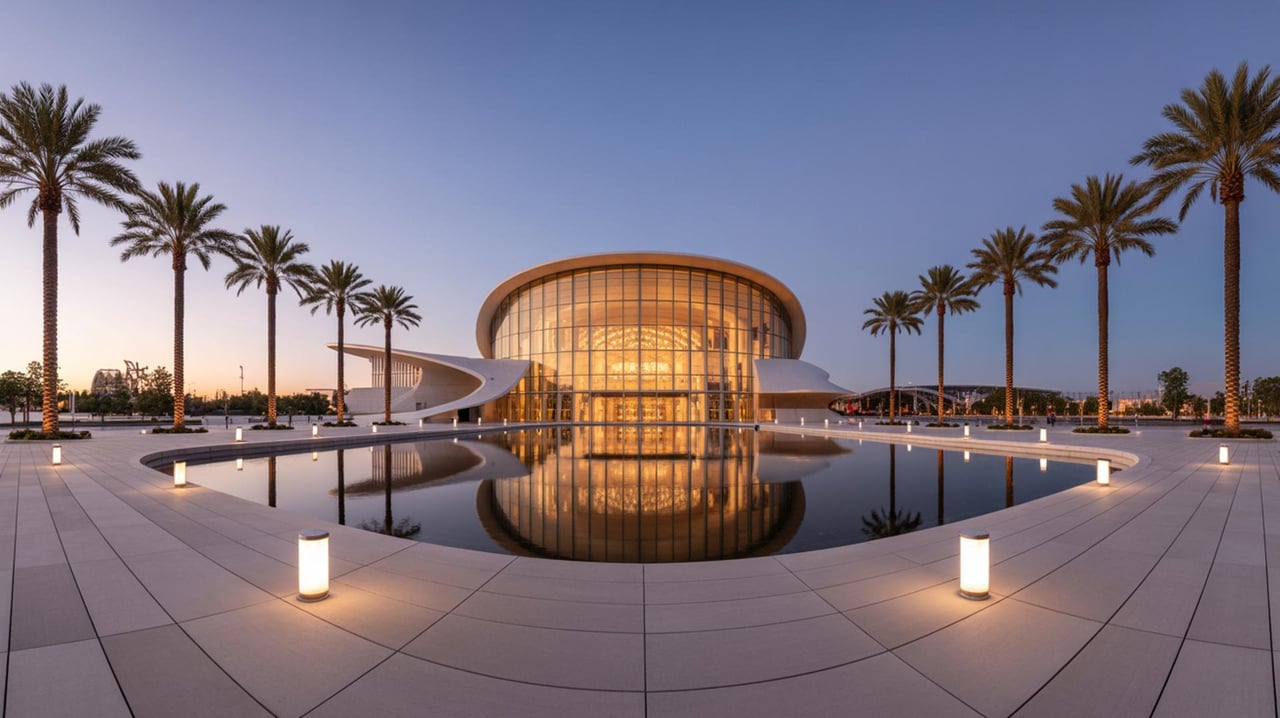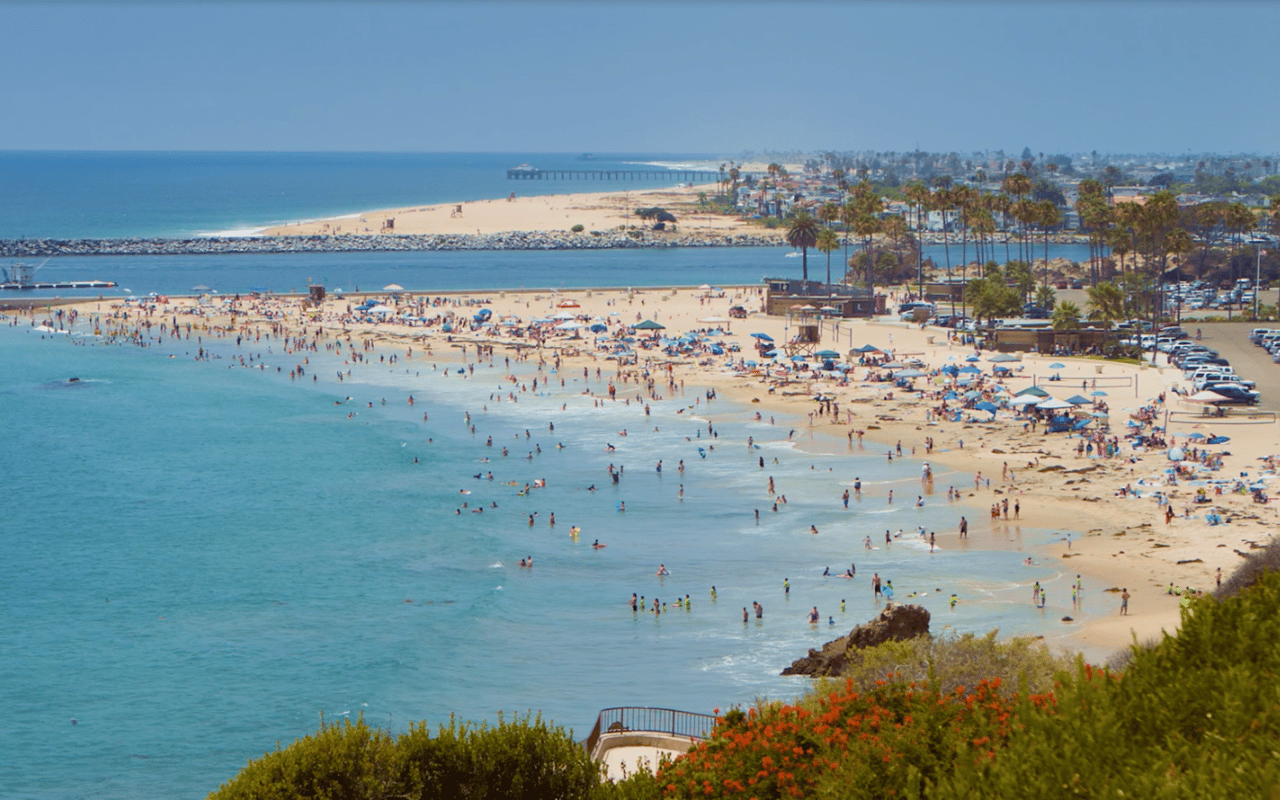
The CdM Farmers Market sets up in the surface lot at Coast Highway and Marguerite Avenue. The clock tower and Centennial Bench frame the corner plaza, and The Port draws people for screenings and private events. In between, along the 1.27 miles of Coast Highway from Avocado Avenue to Hazel Avenue, most storefronts hold barbershops, salons and offices, and a large share of the parking belongs to private lots.
That parking detail is the core of the City of Newport Beach's Corona del Mar Commercial Corridor Study. After two years of open houses and study sessions, it has become a set of proposed code amendments. Staff will brief the community on them at the Chamber's next "Good Morning CdM" on Thursday, Nov. 12. The study's finding about parking explains most of what the City now wants to change.
A parking problem that is really an access problem
As the Daily Pilot reported after the November 2025 City Council study session, the corridor has enough parking overall, but too many of the spaces are locked up in private lots.
"That's really the issue that we're seeking to solve here," Liz Westmoreland, the City's principal planner, told the council, according to the Pilot. "We don't have one magic solution, but we have a suite of solutions that we really think can help with this issue."
The public supply is small. The City's draft Corridor Atlas, marked a working draft for discussion, counts two City-owned lots along the corridor. Old School Park Lot and Bayside Drive Lot both sit behind the parcels that front Coast Highway. Everything else is mostly tied to individual buildings and the businesses inside them.
Why the storefront mix and the parking are the same problem
The study's other headline finding is about what fills the storefronts. The Pilot reported that the corridor is mostly neighborhood goods and services, such as barbershops, nail salons and real estate offices. Food and beverage businesses make up about 20 percent of what the strip offers.
"That's pretty low," Westmoreland said in the Pilot's account. "When we look at other successful main streets, we typically…see the food and beverage [businesses] have closer to a third or even half."
The Atlas measures differently and puts food and beverage at 26 percent of retail uses. Either way, it is the smallest category, and the Atlas states why that matters. Restaurants and bars are the uses that can keep the corridor active past 9 to 5.
The two findings depend on each other. More restaurants would bring more evening visitors who need somewhere to park, and the study's answer to parking is to open up private spaces rather than build new ones. The proposals pair the two.
Demand is already there. The study counted roughly 3 million visitors a year, and about 40 percent of them live within five miles, according to the Pilot. The Pilot reported that the local share is why the recommendations promote trolleys.
How each proposal traces back to a finding
| What the study found | What the City has proposed |
|---|---|
| Spaces exist but sit in private lots | Lease private lots for public use, an approach the Pilot reported San Clemente and Dana Point already use |
| Drivers don't know where open spaces are | An app or digital signage showing available parking, plus wayfinding to lots including CdM State Beach parking |
| Many visitors live within five miles | Expanded trolley or circulator service, employee parking or shuttle programs, and valet |
| Food and beverage is the smallest category | Streamlined approval for preferred restaurant uses without a public hearing |
| Auto-oriented uses break up the walkable frontage | No new drive-throughs, auto repair, or car washes; existing businesses could keep operating |
The restaurant streamlining matters most to anyone who has watched a promising concept struggle through hearings. In its coverage, the Pilot pictured Bandera as the kind of food and drink business the corridor needs more of. Under the proposal, preferred restaurant uses would skip the public-hearing step.
What it means for the sidewalk and the crosswalks
More people walking at night raises the stakes for the street itself. Coast Highway is a state highway that doubles as the village's main street. Mayor Pro Tem Lauren Kleiman described the challenge this way at the November 2025 session, as quoted by the Pilot:
"How do you revitalize a main street that doubles as a highway and is nestled between a residential area and a public beach?"
The Atlas answers with specific locations. It recommends intersection improvements at MacArthur Avenue and at Orchid Avenue, along with bulb-outs, added crosswalk markings, and a safer bicycle route on or near Fifth Avenue. Marguerite and Coast Highway is flagged as a gateway for wayfinding and branding, with pylons, kiosks and light-pole banners in the CdM green that already shows up on the corridor's benches and bike racks.
Business owners have pushed on safety too. Jim Walker, owner of The Bungalow, asked the council for stronger protection along the sidewalk, the Pilot reported. A vehicle crashed into his restaurant eight years earlier, and he said the retaining wall there is "about 15 inches high."
Outdoor dining comes next. The Atlas describes it as "present, but not widespread." Today it takes three forms: patios on private property, tables in private setbacks, and sidewalk seating. The Atlas notes that some sidewalk seating is unpermitted or out of compliance with the Citywide Sidewalk Café Standards. The draft would map public-property sites and sidewalk extensions that could hold dining or parklets, while keeping at least 4 feet of clear path for pedestrians. It also suggests putting food and beverage on or around The Port's ground floor to serve the evening crowd the theater already brings in.
What is still unsettled
Two questions remain open, and both relate to the parking logic.
The first is housing. The Pilot reported that adding homes above businesses didn't win broad community support during outreach. Councilmember Noah Blom spoke in favor of it, and Kleiman said a commitment to remove the residential recommendations had been made at the last outreach meeting. When the Planning Commission held its study session on Sept. 17, staff described a limited mixed-use option capped at 30 units corridor-wide, according to Citizen Portal's summary of the meeting video. Commissioners asked how any residential units would be parked.
The second is who pays for the parking leases. The same summary describes an optional in-lieu parking fee that would help fund leases of private lots. Staff cited roughly $35 per space per month as what some other cities charge, an example rather than a proposed amount. In that account, residents who spoke said parking and traffic on PCH were already at their limit. They also asked that the village's small-scale character be kept.
None of this has been adopted. Here is where the process stands:
- Aug. 12, 2025: community open house at the Oasis Senior Center
- Oct. 7, 2025: community update previewing the draft Corridor Atlas
- Nov. 4, 2025: City Council study session on the findings
- Feb. 10, 2026: Council formally initiates General Plan, Local Coastal Program and Municipal Code amendments
- Sept. 17, 2026: Planning Commission study session, no action taken
- Next, date not yet set: Planning Commission public hearing and recommendation, then City Council consideration
The Pilot reported that implementation could begin as early as late 2026. The City's project page has an interest list for hearing notices.
Thursday, Nov. 12, at the yacht club
The Corona del Mar Chamber of Commerce's Good Morning CdM runs from 8 to 9:30 a.m. on Thursday, Nov. 12, at Bahia Corinthian Yacht Club, 1601 Bayside Drive. City planners Joselyn Perez and Liz Westmoreland will present the proposed zoning recommendations and next steps. It is free and open to the community, with no RSVP, coffee and pastry served, and free parking in the lot.
Changes along Coast Highway affect how a Corona del Mar address lives day to day. That covers where guests park, how late the corner restaurant stays open, and how easy it is to cross at Orchid. If you'd like to talk through what the corridor proposals could mean for your own block, Golding Realty is following the hearings closely. Schedule a Private Consultation with Mary Golding.