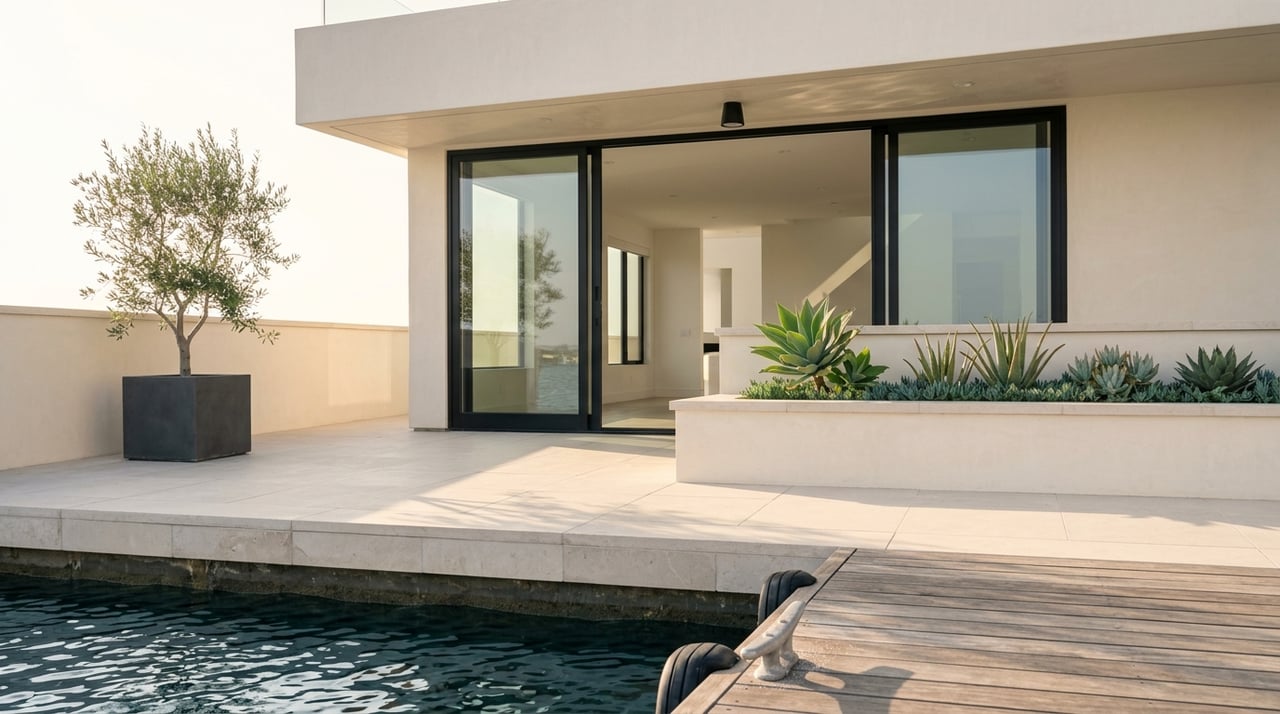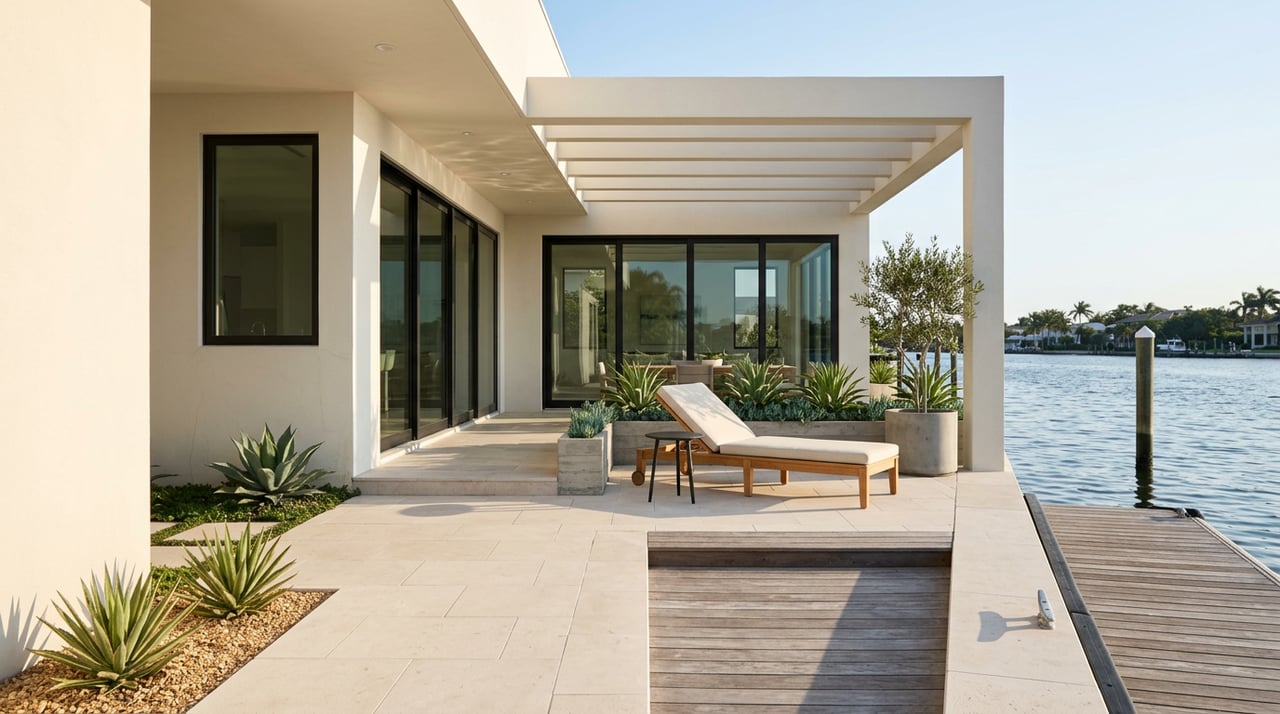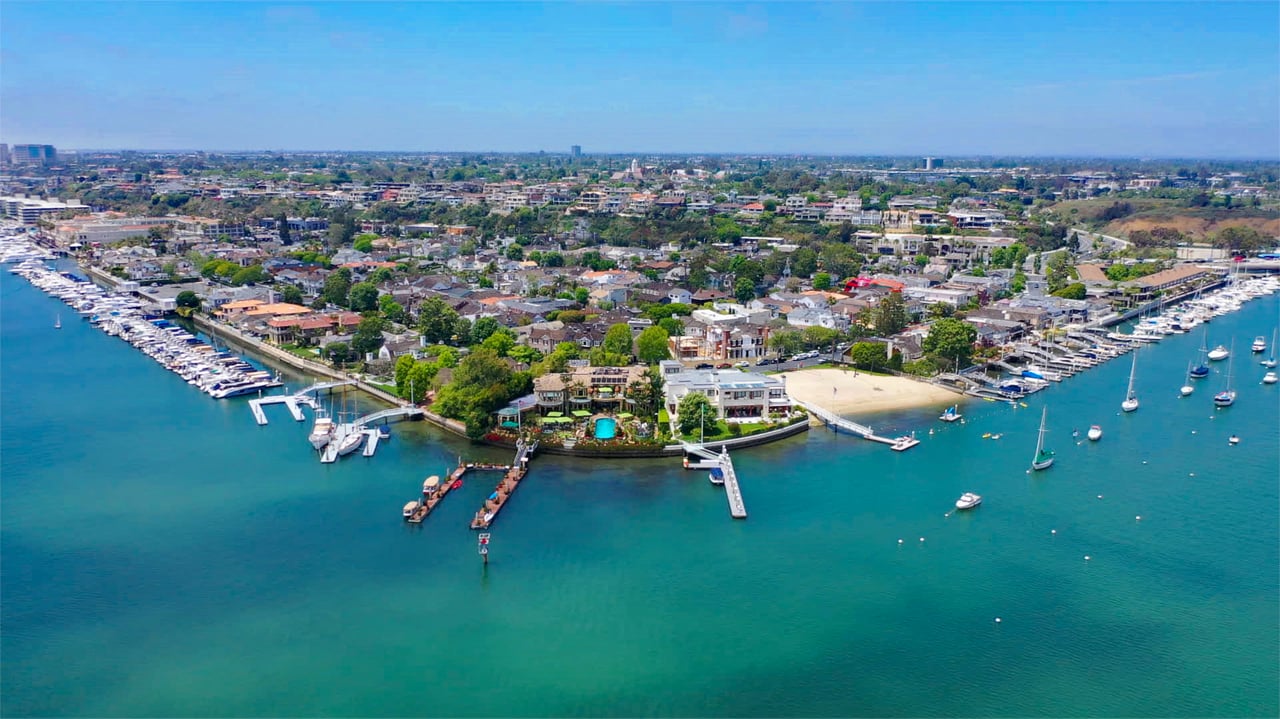
What exactly does a buyer get with the pier behind a bayfront house on Lido Isle, Linda Isle or Balboa Island? The pier is a permit to use public tidelands that the City of Newport Beach manages for the State of California. That permit is now being reviewed on two fronts. One is what it costs each year. The other is how much of the water it covers. Policy recommendations for City Council are targeted for mid-2027.
That makes the dock the one part of a bayfront purchase whose carrying cost is being reset by a public process right now. The likely change with the most weight for owners is how the City measures the area it charges for, more than the per-foot rate.
The pier changes hands on the City's schedule
The friction starts in escrow. The City states that a residential pier permit does not transfer automatically when the home sells. Per the City's harbor permit page, the steps are:
- Buyer and seller submit a completed transfer application and fee together.
- Signatures are due at close of escrow.
- The City inspects the pier.
- Any corrections the inspection calls for must be made.
- The transfer is completed once corrections are done and original signatures are received.
On a joint pier shared by two neighbors, the joint permittee must sign as well. The City lists a turnaround of five to 15 working days for applications. The transfer fee in the City's FY 2026–27 schedule is $344, up from $334 in FY 2025–26.
The fee is minor. The inspection is what can stretch the timeline, because required corrections are a condition of the transfer. If a seller agrees to repair items the City flags, the buyer still holds a dock whose permit has not moved until that work is finished and accepted.
What the annual rent actually measures
Once the permit transfers, the owner pays the City annual rent for the tidelands under the structure. The City's fee schedule sets residential pier rent at $0.58 per square foot for FY 2025–26 and $0.59 for FY 2026–27, with CPI adjustments handled separately. The State Lands Commission notes that under a 2015 resolution, pier rent rises each year by CPI or 2 percent, whichever is lower.
The rate is applied only to the "area of occupation," meaning the physical footprint of the pier and dock over the water. City staff told the Commission in an October 7, 2025 email that this method produces rental areas from 23 to 4,025 square feet. The same email reported annual rents from $13.29 to $2,334.31, with an average of $893.02.
Against a home in this price range, those figures are small, and the state has now formally questioned them.
The state's math on the rate
In December 2025, the California State Lands Commission issued its Report on the City of Newport Beach's Public Trust Land Management. The Commission's benchmark method starts with what local marinas charge for slips. It takes 5 percent of that gross income as a fair return for using state land, then converts the result to a per-square-foot figure. The inputs are Newport Harbor marinas a bayfront owner will recognize:
| Marina (2022 Commission survey) | Slips | Avg. berth length | Avg. monthly rate per foot |
|---|---|---|---|
| Balboa Yacht Basin | 172 | 36 ft | $35.95 |
| Bayside Village Marina | 124 | 28 ft | $34.38 |
| Lido Marina Village | 28 | 56 ft | $65.86 |
| Newport Dunes Resort and Marina | 405 | 30 ft | $48.52 |
| Average | 37.5 ft | $46.18 |
That calculation produces $0.88 per square foot. Using the City's own appraised average slip rate of $50.55 per linear foot instead, it produces $0.96. Commission staff called these rough calculations and said the City is not required to use them. In the report's words:
"it appears that the $0.58 per square foot currently charged for residential piers is significantly below market rate, and fair rental value may be as much as double the current rate."
The report also said below-market leasing may amount to an unconstitutional gift of public funds under the California Constitution. It recommended that the City appraise its residential pier leases immediately and update the rates.
The footprint question may matter more than the rate
For individual owners, the rental area may matter as much as the rate. The Commission's own method adds an "impact area" to the footprint. This is generally a nine-foot-wide strip where a boat would be expected to tie up, or the water inside the slip of a U-shaped dock. The Commission charges for that water because the pier holder has an exclusive right to it and the public effectively loses access.
Newport Beach used to charge for it too. In 2012 the City charged for up to a 10-foot buffer if a boat could use it. In 2013 it dropped the buffer but still charged a lower rate for the interior of U-shaped docks. In 2015 it dropped the U-shaped interior as well. The Commission noted that neither change was explained in the record.
This matters for buyers because a remap would not change every dock by the same amount. A change in the rate scales every pier's rent in proportion. A change in the measured area adds the most to docks with the most usable boat water, especially U-shaped slips whose interiors are now uncharged. When comparing two bayfront homes, it is reasonable to note dock shape and berth layout alongside the view and the frontage.
The City's Navigating Newport Harbor's Future page lists both recommendations: a new independent appraisal with updated rates, and a reevaluation of whether buffer areas and U-shaped interiors should be counted. It also includes a third that affects some owners directly: confirming that subleased residential piers pay the commercial rate. The City says some pier holders sublease their docks without disclosing it or paying fair market rent.
Where the process stands this October
The City manages more than 850 permitted residential piers, and it has acknowledged that it is not charging them fair market rent. Since the report, the process has moved in steps:
- May 27, 2026: A first stakeholder meeting at the OASIS Senior Center in Corona del Mar. Before the meeting, City Manager Seimone Jurjis invited community input, as the Orange County Register reported. Minutes show no policy votes were taken.
- June 25, 2026: The City sent the Commission a progress update and compliance plan, and commissioned independent appraisals of residential piers, moorings and yacht club–managed moorings.
- August 2026: The Commission's Executive Officer reported that the City was working out how to remap residential pier rental areas, with targeted outreach to harbor users planned for a second phase starting in September.
- October 2026: The Harbor Commission begins its review with yacht club–managed moorings. Residential piers come later.
As of the Harbor Commission's September 9 staff report, no residential pier appraisal result or new proposed rate had been published. The City targets mid-2027 for policy recommendations to Council and says that date could move. The City's harbor page also states that "no rate increases, transfer restrictions or other policy changes will take effect without City Council approval and ample public notice."
For a buyer, this means the current rate is still the rate on any pier changing hands this fall. The new rate will be set by a public process with agendas, staff reports and comment periods that anyone can follow through the Harbor Commission.
Moorings show how far the review reaches
Mooring permits are not piers, but they show how seriously the state is taking this review. The Commission found that private sales of mooring permits violate the California Constitution and directed the City to end them with a transition plan fair to current holders. Voice of OC reported in January that a typical 40-foot mooring permit had been selling privately for about $40,000 to $60,000. The Newport Mooring Association raised concerns about holders who had relied on the existing rules.
Nothing in the record proposes ending residential pier transfers. The mooring case shows that the state's review covers how harbor permits change hands as well as what they cost. That is why transferability appears among the topics the City has scheduled for public Harbor Commission sessions through winter 2027.
Channel depth is tracked separately
A dock is only useful if a boat can reach it, and that depends on depth, which follows a different set of rules. The U.S. Army Corps of Engineers began dredging the Lower Newport Bay federal channels in early December 2025. The plan was to remove about 900,000 cubic yards over roughly 10 months. The Daily Pilot reported that the Main Channel, designed to be 15 feet deep, had five to six feet of built-up material that limited larger vessels. Completion was projected for fall 2026. As of this writing, no completion announcement has been located.
The City is clear about where the federal work ends. The Army Corps maintains the federal channels. Other harbor areas are maintained by the City, the County or private parties. A deeper Main Channel does not guarantee depth at any particular private dock. Water depth at the slip is a separate question to answer during due diligence.
Frequently Asked Questions
Is the pier included in the sale of a Newport Beach bayfront home? The pier sits on public tidelands under a City permit. That permit transfers through a separate City application with buyer and seller signatures due at close of escrow, an inspection and any required corrections.
Has the City raised residential pier rent? Not beyond the scheduled fee-table update. FY 2026–27 rent is $0.59 per square foot. Appraisals are underway, and the City says no rate increase takes effect without City Council approval and public notice.
What is an "impact area"? It is the water next to or inside a dock where a boat ties up. The State Lands Commission includes it in rented area. Newport Beach stopped charging for it in stages between 2013 and 2015.
When will a decision be made? The City targets mid-2027 for Harbor Commission recommendations to City Council and says the timing may change.
If a bayfront home is on your list, Mary Golding can review the pier permit, transfer steps and dock layout with you before you write an offer. Golding Realty invites you to Schedule a Private Consultation.
This article is general information, not legal, tax or financial advice. Consult a qualified professional about your situation.